How to Sell Used Car Parts Online in the UK
A practical guide for UK sellers of used car parts: part numbers and fitment, honest condition reports, the legal rules for part-worn tyres and brake linings, what Royal Mail will and will not carry, and your duties as a private seller or trader.
To sell used car parts online in the UK, list each part by its manufacturer part number and the vehicle it came from, describe its condition and history honestly, and check the extra rules before you list tyres or brake parts. Then pack it in a strong box and check the carrier will take it: Royal Mail does not accept body panels, doors, bumpers, bonnets or airbags.
Start with the part number
Buyers search by part number, and a part that looks the same can differ between engine sizes, trim levels and model years. The manufacturer's number is usually stamped, cast or printed on a label on the part itself. Copy it exactly, including any letters and suffixes, and photograph it.
Then give the details of the donor vehicle:
- make, model and year
- engine size and engine code, and the gearbox type, for engine and drivetrain parts
- trim level, for interior parts, lights and electrics
- which side it came from, using nearside (left) and offside (right) as UK buyers expect
- the mileage, if you know it; say "unknown" if you do not
A title such as "Alternator, part no. [number from the casing], 2015 1.6 diesel hatchback, 68,000 miles, tested on removal" gives a buyer enough to check fitment against their own car. "Alternator, fits most cars" does not, and it is a claim you may not be able to back up.
Be careful what you promise about fitment. If you sell as a trader and a buyer tells you which car the part is for, the part must be reasonably fit for that purpose, unless the circumstances show the buyer did not rely on your judgement or it was unreasonable for them to do so (Consumer Rights Act 2015, section 10). Say "removed from" and give the part number, and ask buyers to check the number against their own part before they order.
Describe condition and history
A buyer cannot inspect the part before it arrives, so tell them what you know and what you do not:
- how the part came off the car: from a running car, a car with a known fault, or one damaged in an accident, and which part of the car was damaged
- whether you tested it, and how; "removed from a running car" is not the same as "bench tested"
- every fault, crack, missing clip, damaged connector or bent bracket
- corrosion and wear, with photos
- whether fluids have been drained
- for electronic control units and other modules, whether the part may need coding or programming to work in another car, if you know
If you sell as a trader, the part must match your description and be of satisfactory quality, judged by what a reasonable person would expect given the description, the price and other circumstances (Consumer Rights Act 2015, sections 9 and 11). Faults you point out before the sale are not covered by that quality term, which is another reason to list them all.
Tyres and brake parts have extra rules
Part-worn tyres
If you sell part-worn tyres in the course of a business, the Motor Vehicle Tyres (Safety) Regulations 1994 set conditions that every tyre must meet before you offer it, and listing a tyre for sale counts as offering it (regulations 2 and 7; Consumer Protection Act 1987, section 46). Among other things, a part-worn car tyre must:
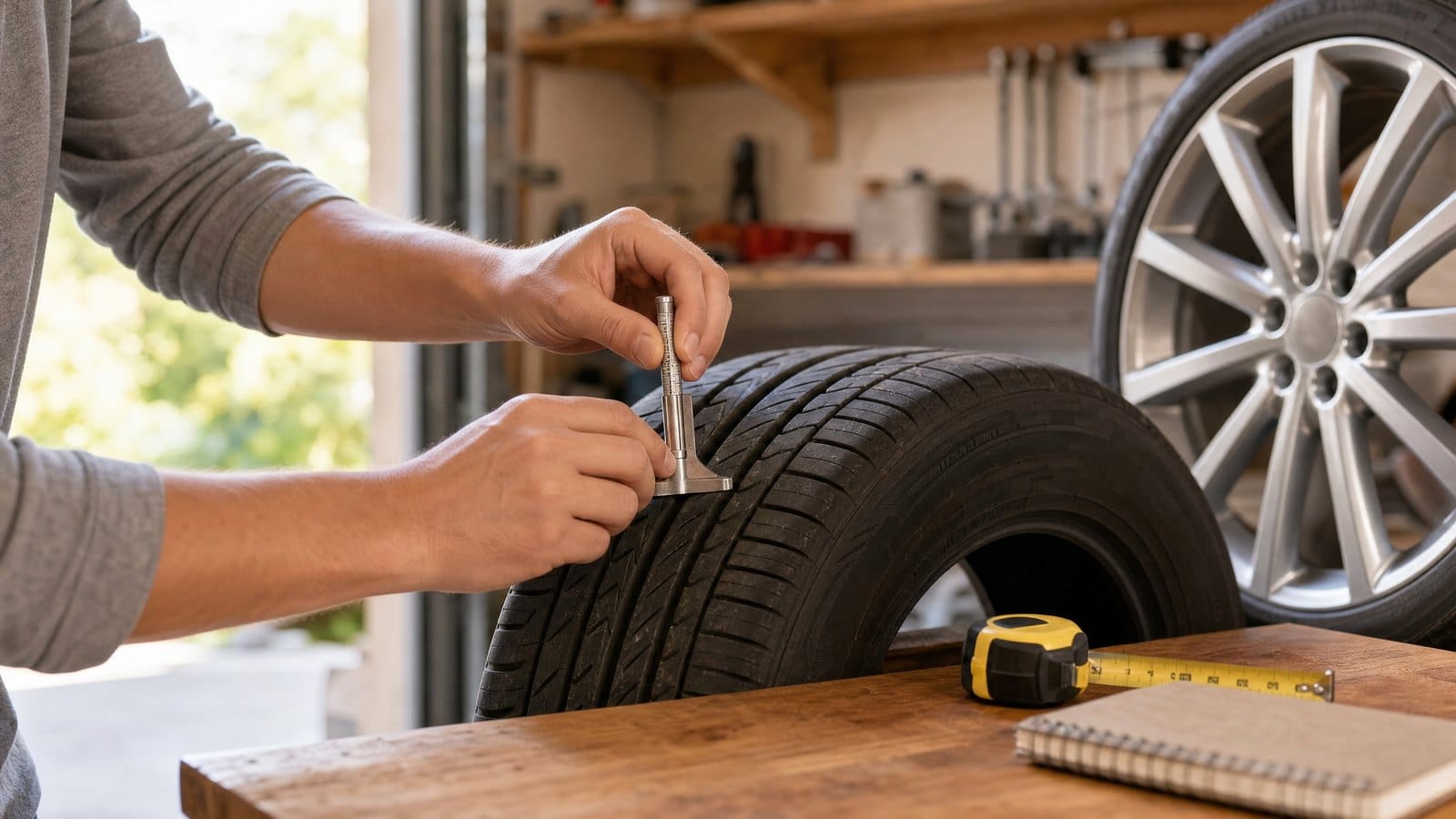
- have tread at least 2 mm deep across the full breadth of the tread and round the whole circumference, with the base of the original grooves clearly visible
- have no cut longer than 25 mm or 10% of the tyre's section width, whichever is greater, that is deep enough to reach the ply or cord
- have no lumps, bulges or tears from structural failure, and no exposed ply or cord, inside or out, including when inflated to its highest design pressure
- carry the approval mark and the speed and load markings moulded on when it was made (retreaded tyres have their own marking rules)
- be marked "PART-WORN" in capital letters at least 4 mm high, next to each approval mark, applied permanently and not by hot branding or cutting into the tyre
- have been properly repaired to the standard the Regulations set, if it has been repaired
Tyres on the wheels of a complete vehicle you sell are outside regulation 7 (regulation 10). Give the tread depth and the date code from the sidewall in each listing, with photos.
Brake pads and shoes
If you sell brake parts as a business, two rules apply. Brake linings that contain asbestos must not be supplied for fitting to any vehicle. Replacement brake linings for cars, minibuses and light vans up to 3.5 tonnes that were first used from 1 September 1999 must be type approved, for example under UN ECE Regulation 90, and marked and packaged as the approval requires (Road Vehicles (Brake Linings Safety) Regulations 1999, regulations 3 to 5). If you sell new old stock pads or shoes, check the box for the approval marking and photograph it.
Price from sold listings
Search for the exact part number and look at what has sold, not what is listed. Compare like with like: a tested part from a low-mileage car is worth more than an untested one, and a part with a broken mounting lug is worth less. For heavy or bulky parts, work the cost of delivery or the offer of collection into your decision before you set the price.
Photograph the details buyers check
For each part, take:
- the part number label or stamp, in focus
- the whole part from each side
- connectors and pins, close up, for electrical parts
- mounting points, threads and brackets
- every fault, with a coin or ruler for scale
Clean off loose dirt so damage is visible, but do not hide wear.
Packing and posting heavy parts
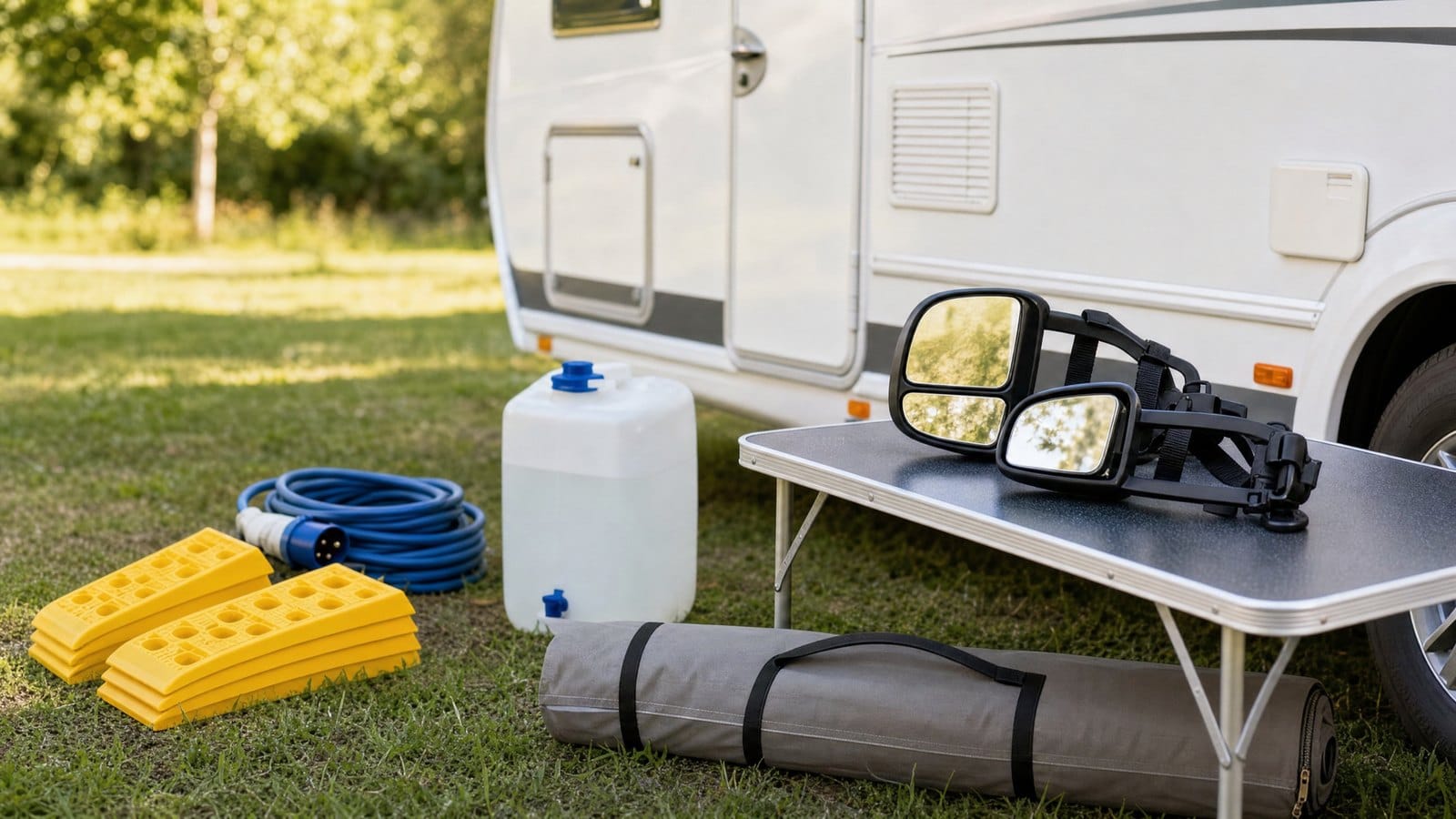
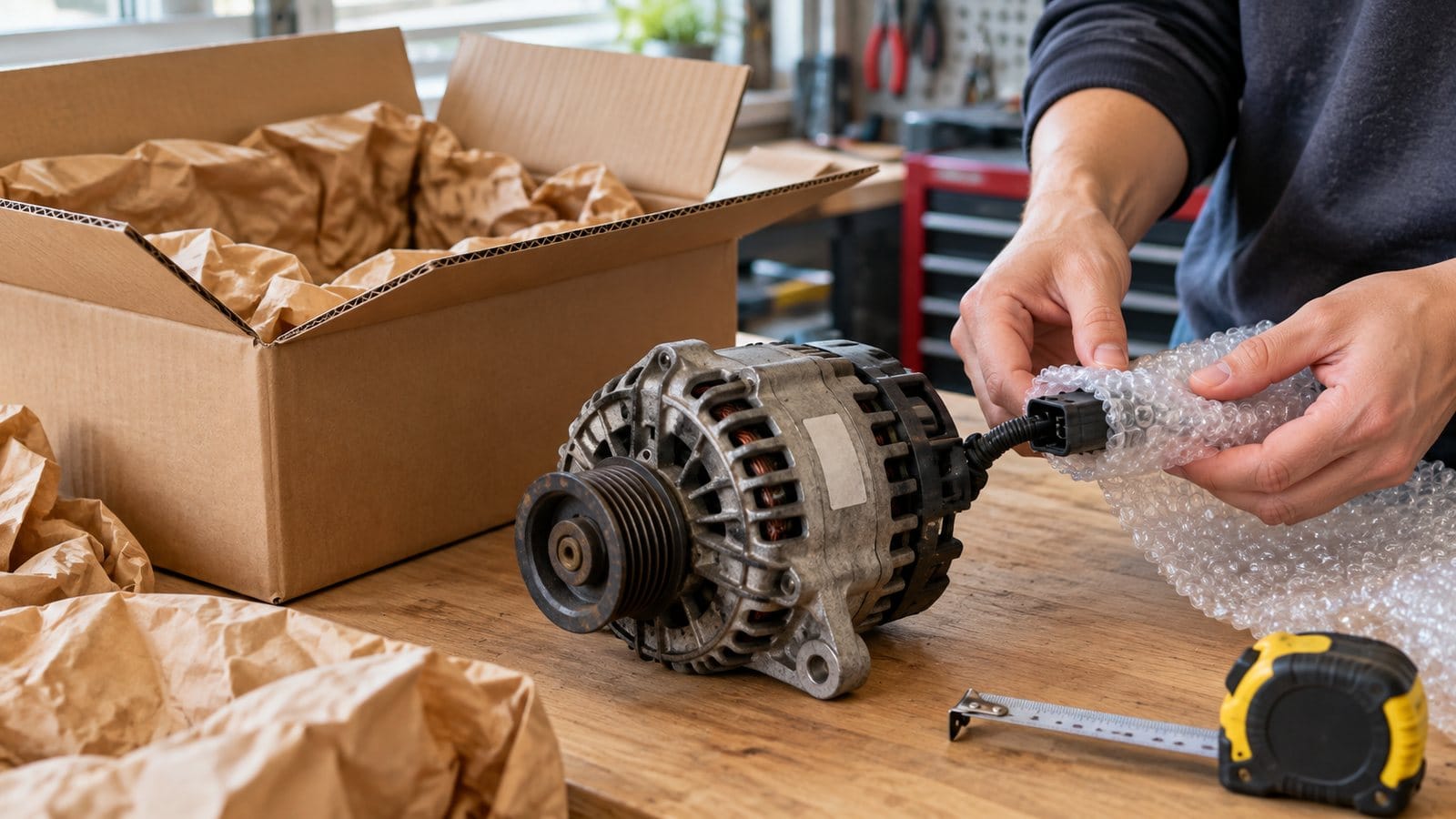
Royal Mail accepts car parts in the UK with restrictions. Car panels, doors, bumpers and bonnets are prohibited. Other parts must be boxed in a strong double-walled corrugated cardboard box that can take the weight. Small precision engine parts such as gears, valves and pistons need internal packing, and sharp edges must be covered so they cannot pierce the box (Royal Mail prohibited and restricted items: car parts).
Royal Mail's list also names air bags among the gases it prohibits, and lists used batteries and used engine oil as environmental waste. Check the list before you post anything that contains gas, fluid or a battery, and drain fluids before you pack an engine or gearbox part.
Weigh and measure the packed box before you choose a service. For panels, bumpers and other large parts, use a courier that accepts them, or offer collection only, and say so in the listing.
If you sell as a trader, you are liable for loss or damage in transit even if the carrier is at fault (Business Companion: selling goods via online platforms), so pack every part to survive being dropped and stacked in transit.
Private seller or trader
Selling a few parts left over from your own car is not the same as buying cars or parts to sell on. Business Companion says a private seller selling to another consumer has minimal obligations, while a business must follow a wide range of consumer laws, and it is an offence for a business to give the impression it is a private seller. There is no set threshold: it depends on the quantity, regularity and nature of the sales (Business Companion: am I in business?).
If you sell as a trader:
- buyers can cancel within 14 days of receiving the part without giving a reason (Business Companion: selling goods via online platforms)
- a buyer can reject a part that is faulty or not as described and get a full refund within 30 days, counted from the day after delivery (Consumer Rights Act 2015, section 22)
- the fitness for purpose rule above applies when a buyer tells you their car
For tax, HMRC says you are probably trading if you sell goods you bought intending to sell for a profit, and you must tell HMRC if your total trading income is more than the £1,000 trading allowance in a tax year (HMRC: income from online platforms).
Another way to be found
A clear part number and an honest condition report save buyers a phone call. You can also list your parts on MC999, a UK marketplace where shoppers discover products and the independent shops behind them. Sellers who already run a Shopify, Shopline or BigCommerce shop can connect it, and others can add products manually, alongside the channels they already use. The How to Sell guide explains both.
Already selling through your own shop? See how to add your products to MC999 and give shoppers another way to find your business.
Frequently Asked Questions
Can a buyer cancel after fitting the part?
If you sold as a trader, the buyer can still cancel within 14 days. If the part has lost value because they handled it beyond what a shop would reasonably allow, such as fitting it to the car, you can deduct that loss from the refund, provided you told them about the right to cancel before the sale (Consumer Contracts Regulations 2013, regulation 34).
Do the part-worn tyre rules apply if I sell my old tyres privately?
The Regulations apply to supply in the course of a business. A private seller is not covered by them, but must still not misdescribe the tyres. If you sell tyres regularly or buy them to resell, you are likely to be trading, and the rules apply in full.
Should I say a part came from an accident-damaged car?
Yes, if you know. It tells the buyer how the part may have been stressed. If you sell as a trader, leaving out information the average buyer needs to make an informed decision can be a misleading omission (Digital Markets, Competition and Consumers Act 2024, section 227). Say which part of the car was damaged and whether your part shows any impact damage.
Sell on MC999
Ready to start selling without paying commission on every sale? Join MC999 as a Founding Seller and keep full control over your prices, delivery and returns.