How to Sell Garden Furniture Online in the UK
A practical guide for UK sellers of garden furniture: materials and measurements buyers ask for, the wear weather leaves, fire safety rules for upholstered sets and cushions, collection and delivery of bulky items, and the extra rules that apply to traders.
To sell garden furniture online in the UK, describe each piece by its material, measurements and condition, check any cushions or upholstery against the fire safety rules, and decide how the furniture will reach the buyer before you set a price. Photograph the wear that weather causes, because that is what buyers ask about first. If you sell as a business, the fire safety rules for upholstered furniture apply to used pieces as well as new ones.
Describe materials and measurements
"Garden furniture set, good condition" leaves a buyer with a dozen questions. Answer them in the listing:
- the material of the frame: hardwood or softwood (and the species, if you know it), powder-coated steel, cast aluminium, synthetic rattan woven over a metal frame, or plastic
- any finish or treatment, such as oil, stain or paint, and when it was last applied
- overall width, depth and height of each piece, the tabletop size and the seat height
- how many it seats, and the folded size of folding chairs
- whether it is assembled or flat-packed, and whether the fixings and instructions are included
- whether cushions are included, and whether their covers come off for washing
- the weight of the heaviest piece, so the buyer can plan how to move it
- For example, a hypothetical listing might read: "Six-seater dining set, powder-coated steel frame, table 150 x 90 cm, 74 cm high, chairs fold flat, seat cushions with removable covers, collection only from a ground-floor garage."
Describe the condition weather has left
Every material ages differently outside, and buyers know where to look. Check and describe:
- wood: greying, splits, loose joints, soft or dark patches at the feet
- metal: rust, flaking paint or coating, bent legs, stiff folding mechanisms
- synthetic rattan: broken or loose strands, especially on arms and seat edges
- plastic and resin: fading, chalky surfaces, cracks
- glass tabletops: chips at the edges and scratches
- cushions: fading, stains, mould spots, flattened filling
If you sell as a trader, the furniture must match your description and be of satisfactory quality, judged by what a reasonable person would expect given the description, the price and other circumstances (Consumer Rights Act 2015, sections 9 and 11). Faults you point out before the sale are not covered by that quality term, so list them.
Be careful with words such as "weatherproof" and "all-weather". Repeat what the manufacturer said about care and winter storage, if you have it, rather than making your own promise. For a trader, a true statement presented in a misleading way can still be a misleading action (Digital Markets, Competition and Consumers Act 2024, section 226).
Cushions, upholstery and fire safety
In England, Scotland and Wales, the Furniture and Furnishings (Fire) (Safety) Regulations 1988 apply to upholstered furniture for private use indoors, including cushions. Business Companion, the Trading Standards guidance site, says they also cover outdoor furniture that is suitable for indoor use, such as upholstered dining sets used in conservatories and gardens. Used furniture must meet the same standards as new furniture (Business Companion: second-hand upholstered furniture).
The rules apply to businesses that supply furniture. Before you sell an upholstered piece or a set with cushions:
- look for the permanent label headed "CARELESSNESS CAUSES FIRE", usually under a seat cushion or behind a loose cover; it carries a batch code that traces the furniture to its maker
- photograph the label for the listing
- if there is no label, Business Companion advises not selling the item until you have expert advice, for example from the manufacturer
Loose scatter cushions and seat pads are covered for their filling material only (Business Companion: new upholstered furniture). Furniture made before 1 January 1950 is outside these Regulations. Since October 2025, new furniture no longer needs a separate display label at the point of sale; the permanent label rules remain (Business Companion: second-hand upholstered furniture; new upholstered furniture).
Everything you sell must also be safe in other ways. Business Companion gives examples of sharp edges and splinters, which fall under the General Product Safety Regulations 2005. Check for protruding screws, sharp metal edges and splintered wood before you list.
Plan delivery before you set a price
Most garden furniture is too large or too heavy for standard parcel services, so decide first how it will reach the buyer:
- collection only, with the address area, access and whether the buyer needs a second person
- local delivery by you, with the distance you cover and the charge
- a courier that takes large items, priced from the packed size and weight
Measure and weigh each piece as it will travel. Dismantling a table or removing a glass top can bring it within a carrier's limits; pack glass separately with corner protectors and mark the box.
If you sell as a trader, three rules matter:
- a sale agreed and paid for online is a distance contract even if the buyer collects, so the buyer can cancel within 14 days of receiving the goods (Consumer Contracts Regulations 2013, regulation 5; Business Companion: selling goods via online platforms)
- before the sale, you must tell the buyer if they will pay to return the goods after cancelling and, for goods that cannot normally go by post, what returning them costs; if you do not, you pay the direct cost of the return (Consumer Contracts Regulations 2013, Schedule 2 and regulation 35)
- you are liable for loss or damage in transit, even when the carrier is at fault (Business Companion: selling goods via online platforms)
Price from sold listings
Compare your furniture with recent completed sales of the same make and model, or the same material, size and number of seats if the make is unknown, rather than with the prices other sellers are asking. Check sold prices when you list, not from a different time of year, and adjust for condition, missing cushions or parts, and whether the buyer has to collect.
Photograph it as a buyer would inspect it
Take:
- the whole set, arranged as it would be used, in daylight
- each piece from the front, side and back
- every fault, close up
- the fire safety label and any maker's label
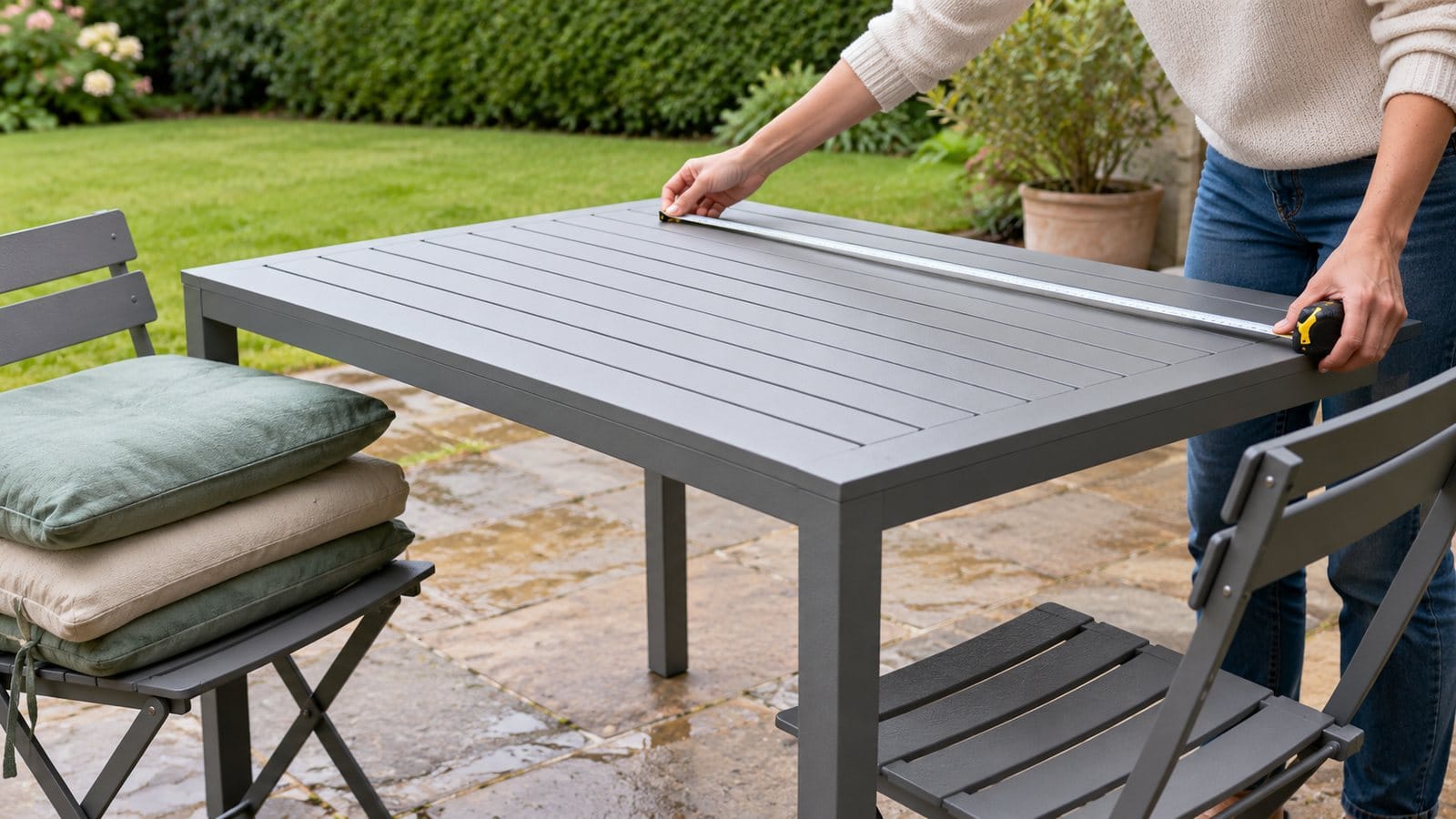
- a tape measure across the tabletop or a seat, so the scale is clear
- the cushions on and off the chairs
Clean the furniture first so marks that will not wash off are visible.
Private seller or trader
Selling the set you replaced last spring is different from buying furniture, or doing it up, to sell at a profit. Business Companion says a private seller selling to another consumer has minimal obligations, while a business must follow a wide range of consumer laws, and it is an offence for a business to give the impression it is a private seller. No single amount decides it: it depends on the quantity, regularity and nature of the sales (Business Companion: am I in business?).
A trader's buyers can also reject goods that are not as described within 30 days of delivery for a full refund (Consumer Rights Act 2015, section 22). HMRC says you are probably trading if you sell goods you bought intending to sell for a profit, and income from trading over the £1,000 trading allowance in a tax year must be reported (HMRC: income from online platforms).
Another way to be found
Measurements, materials and an honest condition report let a buyer decide before they arrange a van. You can also list your furniture on MC999, a UK marketplace where shoppers discover products and the independent shops behind them. If you already sell through a Shopify, Shopline or BigCommerce shop, you can connect it; if not, you can add products manually. Either way, MC999 sits alongside the channels you already use, and the How to Sell guide explains both routes.
Already selling through your own shop? See how to add your products to MC999 and give shoppers another way to find your business.
Frequently Asked Questions
Do cushions for a sun lounger need a fire safety label?
It depends on whether the item is suitable for indoor use. Business Companion says the Regulations cover outdoor furniture that is suitable for indoor use, such as upholstered dining sets used in conservatories. If you sell as a business and are unsure whether a lounger or its cushions fall inside that description, ask your local Trading Standards service before you list it.
Does doing up furniture to resell make me a trader?
It can. HMRC's list of "badges of trade" asks whether an item was repaired, modified or improved to make it easier to sell or to sell at a greater profit. No single badge decides the question, but if you regularly buy sets to repaint and sell, treat it as a business (HMRC Business Income Manual, BIM20205).
What if a buyer collects and finds a fault I did not mention?
If you sold as a trader and the furniture is not as described, or not of satisfactory quality, the buyer can reject it within 30 days for a full refund. Listing every fault with photos protects both of you, because faults pointed out before the sale are not covered by the quality term.
Sell on MC999
Ready to start selling without paying commission on every sale? Join MC999 as a Founding Seller and keep full control over your prices, delivery and returns.