How to Sell Motorcycle Gear Online in the UK
A practical guide to selling motorcycle helmets, visors and riding clothing in the UK: the Road Traffic Act offence for unapproved helmets and visors, the standards GOV.UK lists, honest helmet history, protection labels, measurements and packing.
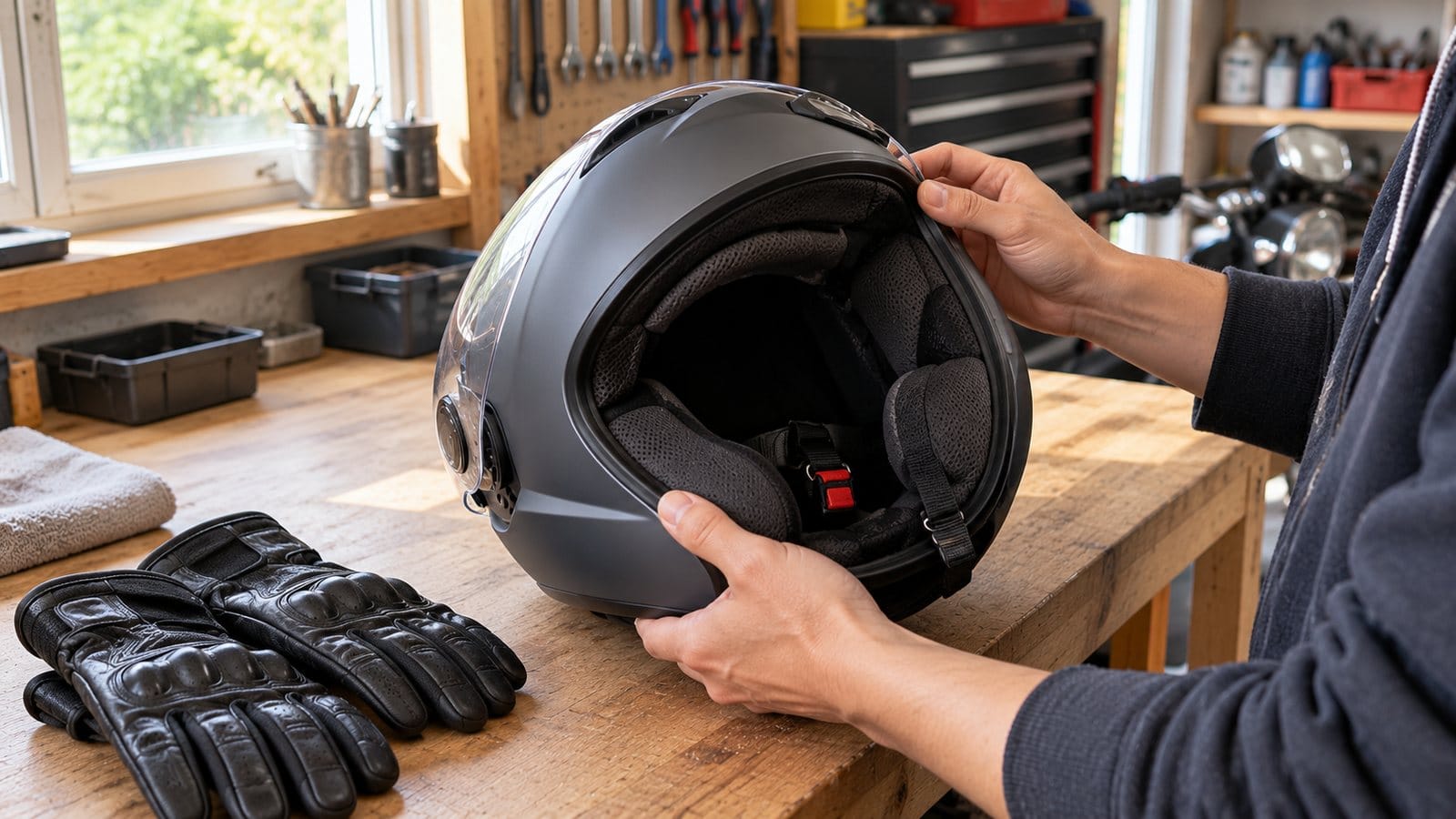
To sell motorcycle gear online in the UK, start with the helmets: it is an offence to sell or offer a helmet as motorcycle protection unless it is of an approved type, and that applies to private sellers as well as shops. Check the approval label, describe the helmet's size, age and history honestly, and do the same for visors and goggles, which have their own approval rules. For jackets, trousers, gloves and boots, describe the protection labels exactly as they appear and give measurements as well as the size.
Helmets: what the law says
Under the Road Traffic Act 1988, a person who sells, or offers for sale, a helmet as a helmet for protecting motorcyclists commits an offence if it is not of a type prescribed or authorised under the Act. The Act treats letting a helmet on hire in the same way as selling it. Selling for export from Great Britain is a defence (Road Traffic Act 1988, section 17).
GOV.UK lists the standards a helmet worn on UK roads must meet. It must:
- meet British Standard BS 6658:1985 and carry the BSI Kitemark, or
- meet UNECE Regulation 22.05, or
- meet UNECE Regulation 22.06, or
- meet a European Economic Area member standard offering at least the same safety and protection as BS 6658:1985, and carry a mark equivalent to the Kitemark
- (GOV.UK: motorcycle helmets and safety equipment.)
Before you list a helmet, find its approval label and photograph it clearly. If you cannot find a label showing one of these standards, do not sell the helmet as motorcycle protection.
Describe a used helmet honestly
A buyer cannot see inside a helmet's shell, so the history you give matters more than the photos. Say:
- whether it has ever been in a crash or dropped onto a hard surface, and if so, from what height and onto what
- how old it is, from the date label inside if there is one, and how much it has been used
- the size label and the head circumference it is meant for, in centimetres
- the shell size, if the maker uses more than one shell across its size range
- the weight
- whether the liner and cheek pads come out for washing, and their condition
- what is included: visor, spare visor, anti-fog insert, chin curtain, bag
- whether it has an intercom fitted, or mounting points for one
If you know the helmet has been in a crash, say so plainly. If you sell as a trader, the helmet must match your description and be of satisfactory quality (Consumer Rights Act 2015, sections 9 and 11), and leaving out information the average buyer needs to make an informed decision can be a misleading omission (Digital Markets, Competition and Consumers Act 2024, section 227).
GOV.UK also points riders to SHARP, the Safety Helmet Assessment and Rating Programme, which shows tested helmets and how much protection they offer. If your helmet model has a SHARP rating, you can quote it, as long as you quote it accurately.
Visors and goggles
Visors and goggles sold for motorcycle use have their own rule. It is an offence to sell, or offer for sale, an eye protector as authorised for use on motorcycles if it is not of a prescribed type (Road Traffic Act 1988, section 18). GOV.UK says a visor or goggles worn when riding must meet a British Standard and carry a BSI Kitemark, or meet UNECE Regulation 22.05 or 22.06, or meet a European standard offering at least the same protection and carry an equivalent mark (GOV.UK: motorcycle helmets and safety equipment).
When you list a visor, give the helmet models it fits, whether it is clear or tinted, and whether it has an approval marking. Do not describe a visor as road legal unless it carries one.
Jackets, trousers, gloves and boots
GOV.UK notes that there is no law requiring riders to wear protective clothing other than a helmet, although it strongly recommends specialist motorcycle clothing (GOV.UK: motorcycle helmets and safety equipment). Buyers of clothing still want to know what protection it offers, so:
- copy the protection labels exactly as they appear, including any standard and class shown
- list the armour: which areas have it, whether it is still fitted, and whether pockets are empty
- give measurements as well as the size: chest and arm length for jackets, waist and inside leg for trousers, hand circumference for gloves, and the insole length for boots
- describe wear honestly: scuffs, repaired seams, broken zips or poppers, worn Velcro
- say whether the item has been in a slide or a crash
Do not claim a level of protection the label does not show. For a trader, that would be a misleading action (Digital Markets, Competition and Consumers Act 2024, section 226).
Price from sold gear
Search completed sales of the same model and size. For helmets, compare examples of a similar age and condition, and expect a helmet with no known history to be priced below one with a full history. For clothing, compare the same model, size and condition, and check whether the sold examples still had their armour.
Photographs
Take, in daylight and on a plain background:
- the helmet from the front, both sides, the back and the top
- the approval label, the size label and the date label, in focus
- the inside of the shell and the liner
- any scratches or marks, close up, with a coin for scale
- clothing laid flat, front and back, with a tape measure across the chest or waist
- every protection label, readable
Packing and posting
A helmet needs space, not pressure. Pack it in a box at least a few centimetres larger than the helmet on every side, with soft padding around it and its bag on, and do not post it in a padded envelope. Clothing can go in a strong bag or box. If you sell as a trader, you are liable for loss or damage in transit even if the courier is at fault (Business Companion: selling goods via online platforms).
Private seller or trader
The helmet and visor offences in the Road Traffic Act apply to "a person" who sells or offers for sale, so they cover private sellers too. Consumer law is different: Business Companion says a private seller selling to another consumer has minimal obligations, while a business must follow a wide range of consumer laws, and it is an offence for a business to give the impression it is a private seller (Business Companion: am I in business?). If you sell as a trader, buyers can cancel within 14 days of receiving the goods (Business Companion: selling goods via online platforms).
For tax, HMRC says you are probably trading if you sell goods you bought intending to sell for a profit, and trading income above the £1,000 trading allowance in a tax year must be reported (HMRC: income from online platforms).
Another way to be found
An approval label, an honest history and accurate measurements let a rider buy with confidence. You can also list your gear on MC999, a UK marketplace where shoppers discover products and the independent shops behind them. If you run a Shopify, Shopline or BigCommerce shop, you can connect it; if not, you can add products manually. The How to Sell guide explains both routes.
Already selling through your own shop? See how to add your products to MC999 and give shoppers another way to find your business.
Frequently Asked Questions
Can I sell a helmet that has been dropped?
You can, but tell the buyer exactly what happened: the height, the surface and whether there is any visible damage. Some riders will not buy a helmet that has had an impact, and a damaged shell or liner may no longer protect as it should. If there is any doubt about its condition, do not sell it for riding.
Can I sell an old helmet with no approval label?
Not as a helmet for protecting motorcyclists, because that is the sale the Road Traffic Act makes an offence for helmets that are not an approved type. If you want to sell it as a display or collector's piece, say clearly that it is not for riding, and ask your local Trading Standards service first.
What size information do helmet buyers need?
The size label, the head circumference range in centimetres, and the shell size if the maker uses more than one. Buyers also ask about the weight and the fit around the cheeks, so mention whether the cheek pads are original or have been changed for a different size.
Sell on MC999
Ready to start selling without paying commission on every sale? Join MC999 as a Founding Seller and keep full control over your prices, delivery and returns.