How to Sell Pet Products Online in the UK: A Beginner Guide
Before you sell pet products online in the UK, check which rules apply: feed registration and labels for food and treats, product safety for accessories, VMD rules for flea treatments, plus returns and tax.
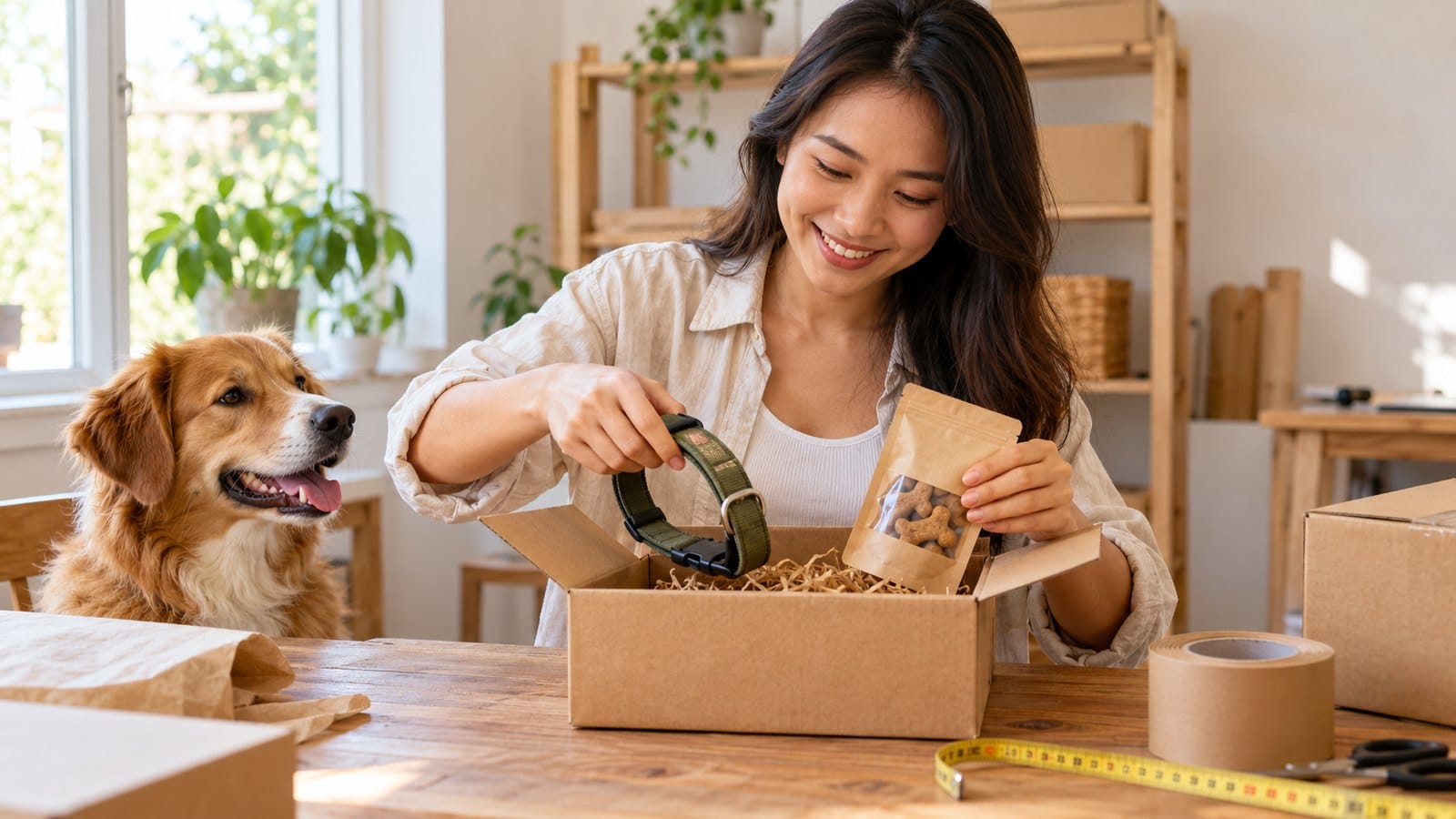
Before you sell pet products online in the UK, work out which legal category each product falls into. Pet food and treats, including home-baked dog cakes, are regulated as animal feed. Flea, tick and worming treatments may be veterinary medicines with their own sales rules. Toys, collars, leads, beds, bowls, clothing and grooming tools are general consumer products covered by the General Product Safety Regulations 2005. This guide takes each category in turn, then covers listings, delivery, returns and tax.
Decide what you will sell
Two questions come first: do you make the product or buy it in to resell, and is it food?
The answer decides your duties. Under the General Product Safety Regulations 2005, a producer includes anyone who puts their own name or trade mark on a product, and anyone who imports it into the UK. A maker of pet food is a feed business. A reseller of sealed products from another business usually has lighter duties, as the sections below explain.
Registering a pet food or treat business
If you make pet food or treats, you are a feed business and must register with your local authority before you start, even if you bake dog cakes at home. Registration is free (Business Companion: manufacturing your own pet foods).
Products made with ingredients of animal origin may also need approval from the Animal and Plant Health Agency (APHA). Business Companion's guidance for England gives eggs, meat, milk, butter and honey as examples of such ingredients. GOV.UK explains the APHA process for raw pet food and dog chews made from animal by-products, and you cannot start production until APHA and your local authority have approved or registered you (GOV.UK: using animal by-products to make pet food).
If you resell another business's pet food, you do not need to register as a feed business. Splitting a bulk pack into smaller packs still counts as retail, provided you keep the original labelling, including the original business name and address, on each smaller pack (Business Companion: retail sale of pet food). Changing the recipe, or repackaging under your own name, may make you a feed business operator.
The Business Companion guidance quoted here is written for England, and Wales has its own version. In Scotland and Northern Ireland, ask your local council for the current position.
What goes on a pet food label
Labelling of packaged pet food placed on the UK market follows Regulation (EC) No 767/2009. The information must be clear, readable and permanent, and in English (Welsh can be added). The label needs:
- the type of feed, such as "complete pet food"
- the name and address of the business responsible
- a batch or lot number
- the net quantity
- the species the food is for
- feeding instructions
- ingredients under the heading "Composition", in descending order by weight
- for cat and dog food, the analytical constituents: crude protein, crude fibres, crude fat and crude ash
- the minimum storage life: "best before" with a month for most foods, or "use before" with a full date for highly perishable foods
Additives must be declared under the heading "additives", and the moisture content must be stated where it exceeds 14%. The label must also give a free telephone number or other contact details.
For online sales, the mandatory information must appear on the material supporting the sale or be given to the buyer before the contract is concluded. Four items are exempt from that rule: the business name and address, the batch number, the net quantity and the minimum storage life.
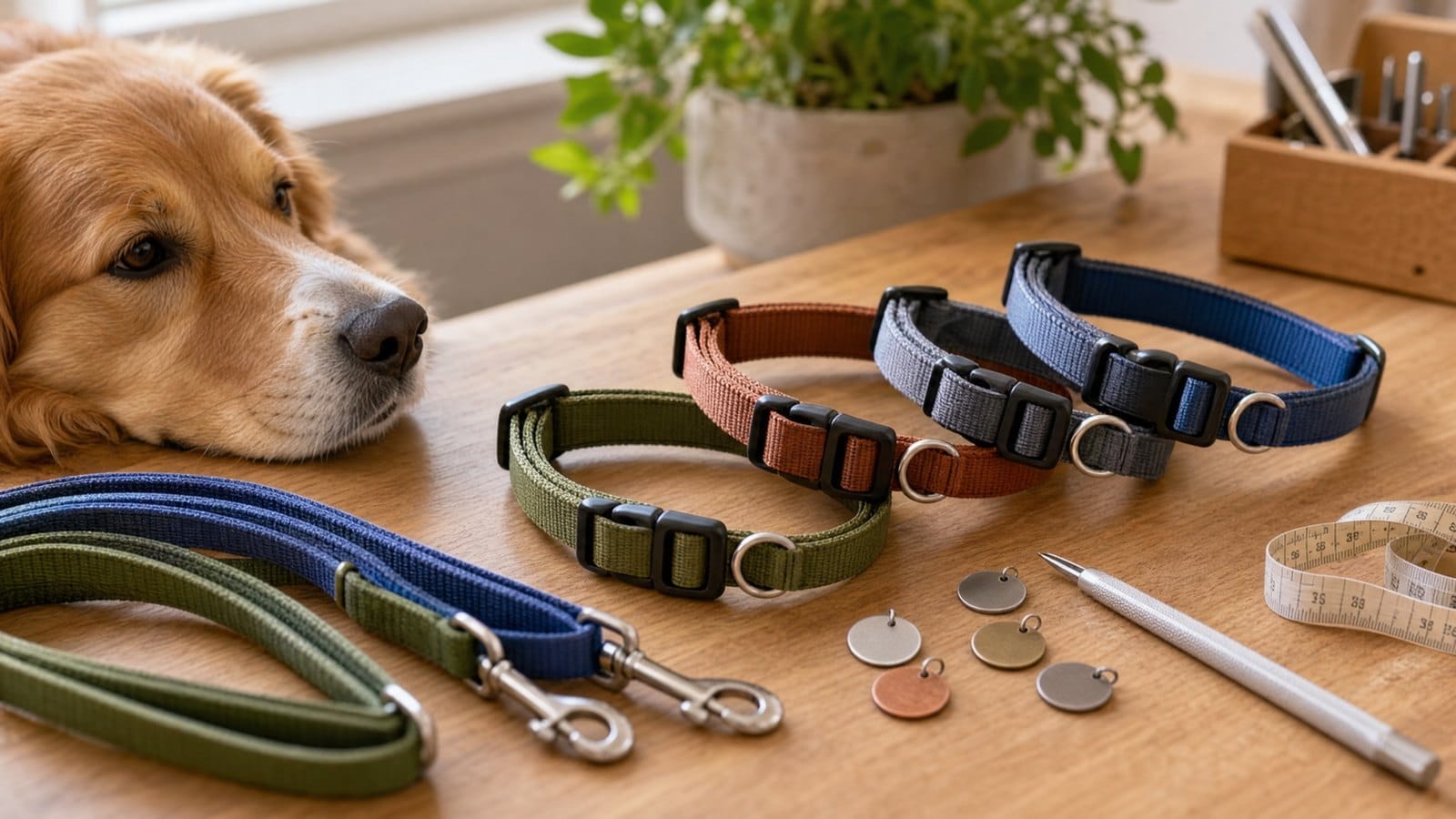
Toys, beds, collars and other accessories
Most pet accessories are general products under the General Product Safety Regulations 2005, which cover products intended for consumers or likely to be used by them (GOV.UK: General Product Safety Regulations 2005).
As a producer, you must make sure a product is safe before you place it on the market, give adequate information about any risks that are not obvious, and show your name and address on the product or its packaging where reasonable.
As a distributor (a reseller), you must act with due care to help ensure only safe products are supplied, must not supply products you know or should know are dangerous, and must keep records showing where you bought the goods.
The government consulted on a new product safety framework from 31 March to 23 June 2026. The outcome had not been published by 15 October 2026, so check GOV.UK for the current position before you list.
Electrical items such as heated pads, automatic feeders and water fountains need extra checks. The Electrical Equipment (Safety) Regulations 2016 apply to equipment designed for use between 50 V and 1,000 V AC. In Great Britain, either the UKCA or the CE marking can be used. Distributors must check the marking, the instructions and the safety information before supplying the product.
Flea, tick and worming products
Many flea, tick and worming products are authorised veterinary medicines. Look up each one on the Veterinary Medicines Directorate (VMD) Product Information Database to find its legal category (VMD: retail of veterinary medicines).
- AVM-GSL products have no retail restrictions and can be sold by a general shop.
- NFA-VPS and POM-VPS products can only be supplied by a vet, a pharmacist or a Suitably Qualified Person (SQP).
- POM-V products need a prescription from a vet after a clinical assessment of the animal.
To sell NFA-VPS, POM-VPS or POM-V products online, you must register with the VMD and wait for your registration to be confirmed before you sell. AVM-GSL products need no registration (VMD: sell veterinary medicines on the internet).
You must not advertise a veterinary medicine that does not have a current UK or GB marketing authorisation, and POM-V and POM-VPS medicines must not be advertised to the public at all (VMD: advertise veterinary medicines legally).
Listings and photos that answer buyers' questions
Buyers cannot see or handle the product before they order, so the listing has to do that job. Photograph:
- the whole product on a plain background
- a close-up of the material and stitching
- the product next to a hand or a ruler to show its size
- the back of the pack, with the label readable
Give sizes in centimetres: for example, chest measurement and back length for clothing, and the inside measurement of the sleeping area for beds. Say which animal the product is for, list every material (fabrics, fillings and coatings) and give full care instructions, including whether the item can go in a washing machine. If a toy is not suitable for very rough play, say so.
Before a buyer orders, your shop must show your business name, contact details and address, a description of the goods, the total price including taxes, delivery details and costs, and how to cancel (GOV.UK: online and distance selling). Under the Consumer Rights Act 2015, goods must match their description and be of satisfactory quality.
Packing, delivery and returns
Pack each order so it arrives clean and undamaged. Deliver within 30 days unless you agree a different date with the buyer, and state all delivery options and costs in the listing.
Buyers can cancel for any reason within 14 days of receiving the goods, then have a further 14 days to return them. You must refund within 14 days of getting the goods back. You can reduce the refund only if the goods have been used or damaged beyond what was needed to examine them (GOV.UK: accepting returns and giving refunds). If you do not tell buyers about the right to cancel, the cancellation period can extend by up to 12 months.
The right to cancel does not apply to goods made to the buyer's specifications or clearly personalised (such as an engraved ID tag), goods that deteriorate or expire rapidly, or sealed goods that cannot be returned once unsealed for health protection or hygiene reasons (Consumer Contracts Regulations 2013, regulation 28).
Set out a returns policy in your shop: how to return an item, where to send it, who pays for return postage and how long the refund takes.
Tax basics for a new seller
HMRC's trading allowance covers up to £1,000 of gross trading income a tax year, meaning your income before expenses. If your gross trading income is £1,000 or less, you generally do not need to tell HMRC, but you should keep records of your income and expenses.
If your gross trading income from all trading is more than £1,000, you must register for Self Assessment (GOV.UK: register as a sole trader), and you can deduct either the trading allowance or your actual expenses, not both.
The tax year runs from 6 April to 5 April. If you need to send a return, tell HMRC by 5 October after the end of the tax year. If you started trading between 6 April 2025 and 5 April 2026, that deadline was 5 October 2026.
Another way for shoppers to find you
Clear labels, sizes and care details help pet owners choose with confidence. You can also list your products on MC999, a UK marketplace where shoppers discover products and the independent shops behind them. If your shop runs on Shopify, Shopline or BigCommerce, you can connect it, and shoppers who find a product on MC999 go to your own shop to buy. You can also add products manually; the How to Sell guide covers both.
Already selling through your own shop? See how to add your products to MC999 and give shoppers another way to find your business.
Frequently Asked Questions
Are there extra rules for raw pet food and dried chews?
Yes, if you make them. Raw pet food must be packed in clean, leak-proof packaging, and you must give safe handling guidance for everyone who handles it, including customers, on your website or the packaging. For dog chews, you must carry out sampling tests to show that your treatment destroys diseases such as salmonella (GOV.UK).
Can I say my pet product treats or prevents a health problem?
No. A non-medicinal product cannot claim to prevent or treat disease, and a natural origin does not exempt it. A product that only repels external parasites is not a medicine; one that kills or treats parasites is a medicine and must be sold under veterinary medicines law (VMD: advertising non-medicinal veterinary products).
What happens if a buyer says an item is faulty?
If goods are faulty, not as described or do not do what they should, the buyer can return them for a full refund within 30 days. If they come back within 6 months, you must repair or replace them, and refund if that does not fix the problem. After 6 months, the buyer may need to show that the fault was there when they bought the item. Buyers can claim for up to 6 years (5 in Scotland).
Sell on MC999
Ready to start selling without paying commission on every sale? Join MC999 as a Founding Seller and keep full control over your prices, delivery and returns.