Selling Handmade Pet Accessories Online: A UK Seller Guide
If you sell handmade pet accessories in the UK, you are the producer under product safety law. Safety duties, fibre labels, costing your time, made-to-order pieces, listings and when a hobby counts as trading.
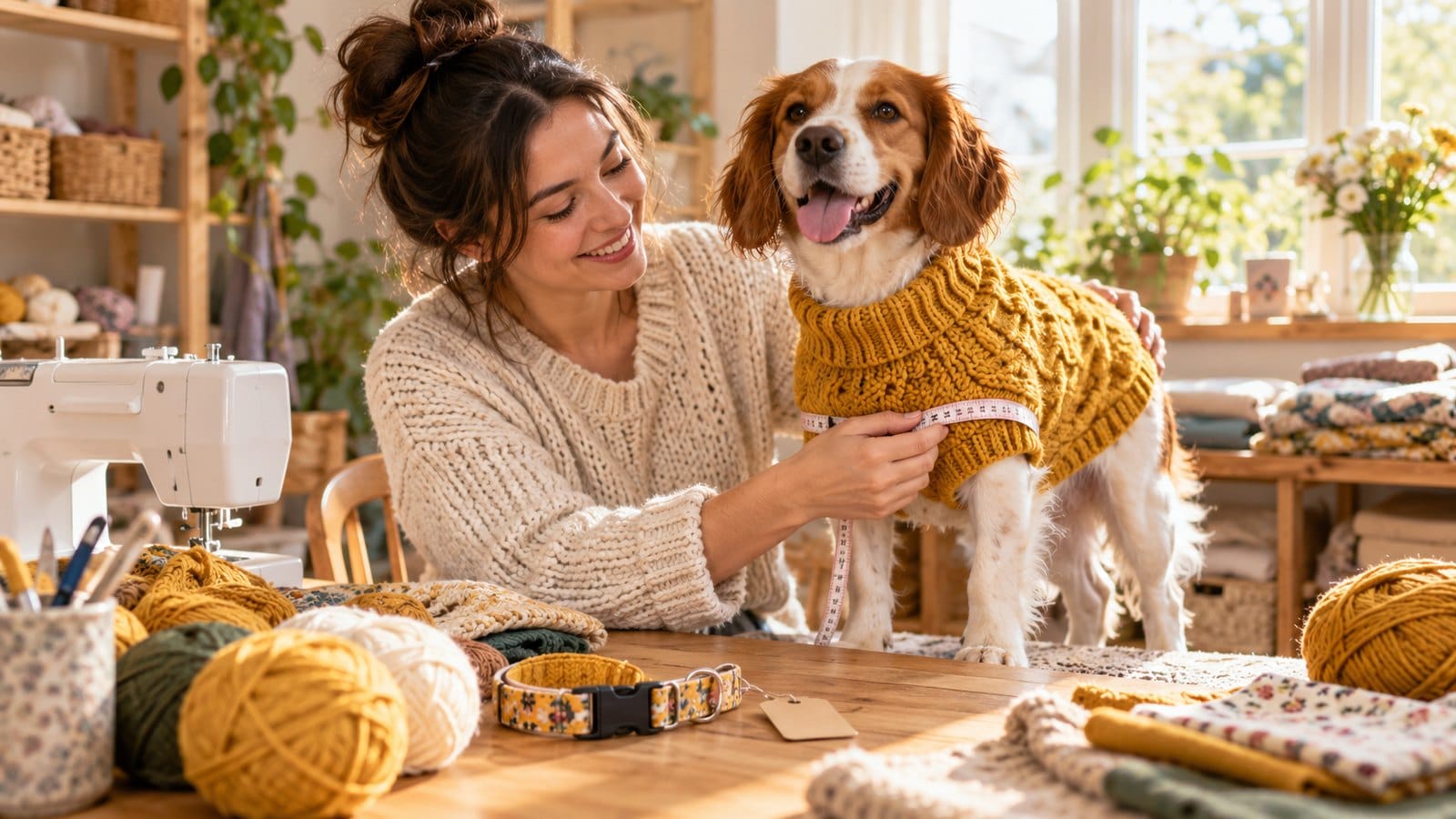
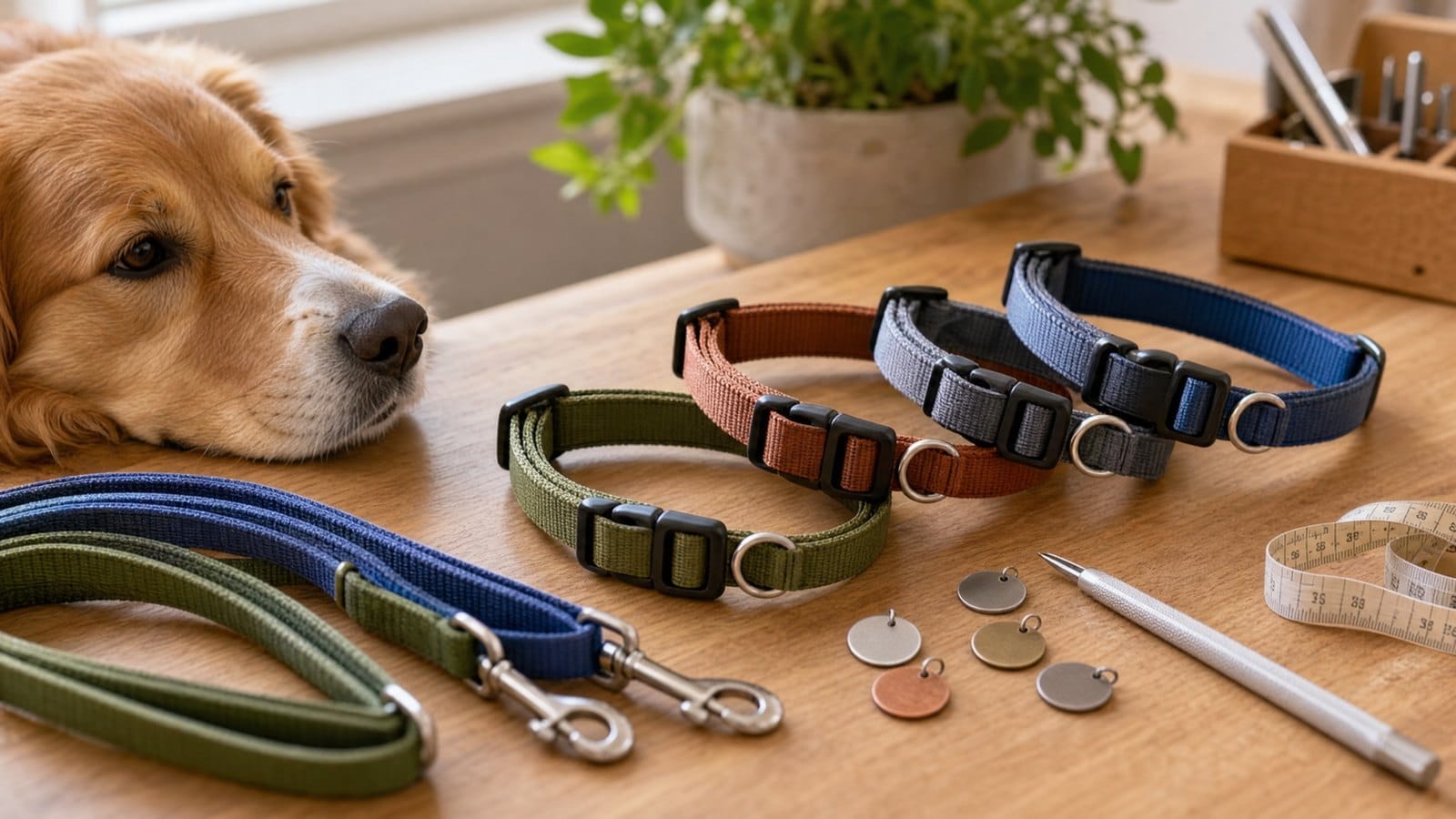
If you make pet accessories to sell in the UK, four things matter before you list: the items must be safe for animals and the people who handle them, they must be traceable to you, they must be described honestly, and the price must cover your time. You also need to know when hobby making becomes trading. This guide is for makers of dog coats and jumpers, collars and leads, fabric beds and blankets, bandanas, pet toys and ID tag holders. If you also make treats, feed rules apply too: see our guide to selling pet products online in the UK.
Making items that are safe for animals and people
When you make a consumer product and sell it under your name, you are its producer under the General Product Safety Regulations 2005. A pet accessory counts because your customers buy it for their pets and handle it themselves.
The 2005 Regulations apply in England, Scotland and Wales. Northern Ireland has followed the EU General Product Safety Regulation since 13 December 2024. The government consulted on a new product safety framework from 31 March to 23 June 2026; the outcome had not been published by 15 October 2026, so check GOV.UK before you list.
As a producer, you have four main duties:
- Only place safe products on the market: a product that poses no risk, or only the minimum risk acceptable in normal and reasonably foreseeable use.
- Give owners enough information to use the product safely, including any risks that are not obvious and how to guard against them.
- Where reasonable, show your name and address and a product reference or batch number on the item or its packaging.
- Keep informed about risks your products may pose and, where reasonable, test samples and investigate safety complaints.
Business Companion adds that a producer's address must be in Great Britain, and that you must tell the enforcement authority in writing if you know you have supplied an unsafe product (Business Companion: general product safety for producers).
The rest of this section is practical good practice rather than a legal requirement:
- Use swing tags or sewn-in labels for your name, address and reference. Use a batch number for items made in batches and a product reference for one-off pieces, and note the reference on the order.
- Tug every fastening, seam and attached part before you list the item. Trim loose fibres and keep cords short.
- Avoid small parts that could be swallowed, such as buttons, plastic eyes and small beads; embroider features instead.
- For washable items, choose fabrics that will not shrink, run or come apart at the seams. Wash a test piece first and record any problems against the pattern.
Labels for fabric items
Under the Textile Products (Labelling and Fibre Composition) Regulations 2012, textile products must carry a label showing their fibre composition. A textile product is one made of at least 80% textile fibres by weight. The label must be in English, easy to read and firmly attached. List the fibres in descending order of weight, using the approved fibre names and the percentage of each, for example "80% cotton, 20% polyester". Only the approved fibre names may be used.
Some items need no fibre label. The list of exempt products includes clothing for animals, such as dog coats and jumpers, and toys, although it does not say whether "toys" includes pet toys (Annex V).
Many items are not on that list, including collars, leads, bandanas, ID tag holders, dog beds and blankets. A blanket made only of textile fibres is a textile product; a filled dog bed may or may not be, depending on the 80% test. Ask your local Trading Standards service before deciding not to label items like these.
One trap applies even to exempt items: if your shop name or trade mark contains an approved fibre name, such as "wool", the labelling rules apply and you must state the fibre content.
Where a fibre label is required, also give the fibre content in your listing, because buyers order from the description, and make sure every fibre claim is accurate.
Care instructions are separate. There is no specific legal duty for these items, but it is good practice to include them in the listing, based on your own wash tests: hand or machine wash, and at what temperature.
Costing and pricing your time
Before you set a price, add up your costs: materials, your time, packaging and postage, selling costs such as platform and payment fees, and the profit you want to make.
Your time includes designing, buying materials, photographing finished items, writing listings, packing orders and answering messages, not only making.
Postage can be built into the price or charged separately at checkout. Include a profit allowance so you can reinvest in tools, materials and growing the business.
A hypothetical costing for one medium knitted dog jumper (figures chosen to illustrate the method, not a recommended price or hourly rate):
- yarn and thread: £10
- time for making, photographing, listing and packing: 3 hours at £12 an hour, £36
- packaging: £1
- selling and payment costs: £3
- profit allowance: £10
- total: £60
This example charges postage separately at checkout. Recalculate when fees change. If buyers will not pay £60, look again at the design, materials or making time before you cut your profit.
Made-to-order and personalised pieces
For made-to-order items, tell buyers the delivery time before they pay; the Consumer Contracts Regulations 2013 require you to say when you will deliver. If no time is agreed, the Consumer Rights Act 2015 requires delivery without undue delay and within 30 days of the order. You and the buyer can agree a longer time.
Ask buyers to measure their dog in centimetres, and give a photo guide showing where to measure the neck and girth.
Goods made to the buyer's specifications or clearly personalised are an exception to the right to cancel (Consumer Contracts Regulations 2013, regulation 28). Business Companion gives a made-to-measure suit and a gift engraved with the recipient's name as examples. The exception does not cover items assembled from stock parts or chosen from a set menu of options: a standard knitted jumper offered in a choice of colours would most likely not count as made to the buyer's specifications.
Tell buyers before they purchase that made-to-order or personalised items cannot be cancelled; Schedule 2 of the Regulations requires this. Put it in the listing and in your terms and conditions.
Photos and descriptions for handmade work
The listing is the only way a buyer can see the item before ordering.
- Show the item on a real dog and give that dog's measurements alongside the size it is wearing.
- For coats and jumpers, add a size guide with neck, chest and back measurements in centimetres, how much the knit stretches, and whether the fit is snug or roomy.
- Photograph in good daylight so the yarn and fabric colours are true, and note that colours can look slightly different on screens and between dye batches.
- Say how the item is made, for example hand knitted, machine sewn or hand finished.
Misleading actions and omissions about the goods are prohibited under the Digital Markets, Competition and Consumers Act 2024. Under the Consumer Rights Act 2015, what you say about the size and materials forms part of the contract (section 11), so you cannot change them without the buyer's agreement.
When a hobby becomes a business
Selling what you make can count as trading. HMRC says you are probably trading if you make goods to sell, including items made in your spare time as a hobby, and income from all your trading is added together (HMRC: income from online platforms).
Since 1 January 2024, digital platforms must share sellers' details with HMRC, unless a seller makes fewer than 30 sales of goods in a calendar year and receives less than about £1,700 (€2,000) from them. The platform must also give you a copy of what it sends. GOV.UK notes that a platform report does not automatically mean you owe tax and does not replace your own records (GOV.UK: selling on a digital platform).
Where MC999 fits
Clear sizes, honest materials and good photos help pet owners choose the right piece. You can also list your handmade work on MC999, a UK marketplace where shoppers discover products and the independent shops behind them. You can add products manually or connect a shop that runs on Shopify, Shopline or BigCommerce, and shoppers who find a product on MC999 go to your own shop to buy. The How to Sell guide covers both.
Already selling through your own shop? See how to add your products to MC999 and give shoppers another way to find your business.
Frequently Asked Questions
Do I need to register as a business to sell handmade pet items?
You can start trading as a sole trader straight away, under your own name or a business name. You do not need to register for Self Assessment if your trading income is £1,000 or less in a tax year (6 April to 5 April), but you should keep records from the day you start (GOV.UK: set up as a sole trader).
How can a small maker compete with larger sellers?
Not usually on price, but you can compete on detail and service. Put the product name, size and material in every listing title, use your knowledge of each pattern to advise on sizing, answer questions quickly, and use the same shop name and images wherever buyers find you, so they recognise your work.
Sell on MC999
Ready to start selling without paying commission on every sale? Join MC999 as a Founding Seller and keep full control over your prices, delivery and returns.